How to Design a Functional Kitchen: Expert Tips You Won’t Find Elsewhere
The kitchen, often the soul of a home, is where we spend over 400 hours annually. However, a poorly planned layout can make this essential space a daily challenge for many. With over a decade of experience in kitchen design, we’ve witnessed a recurring issue: homeowners investing in visually stunning kitchens that fail to function seamlessly.
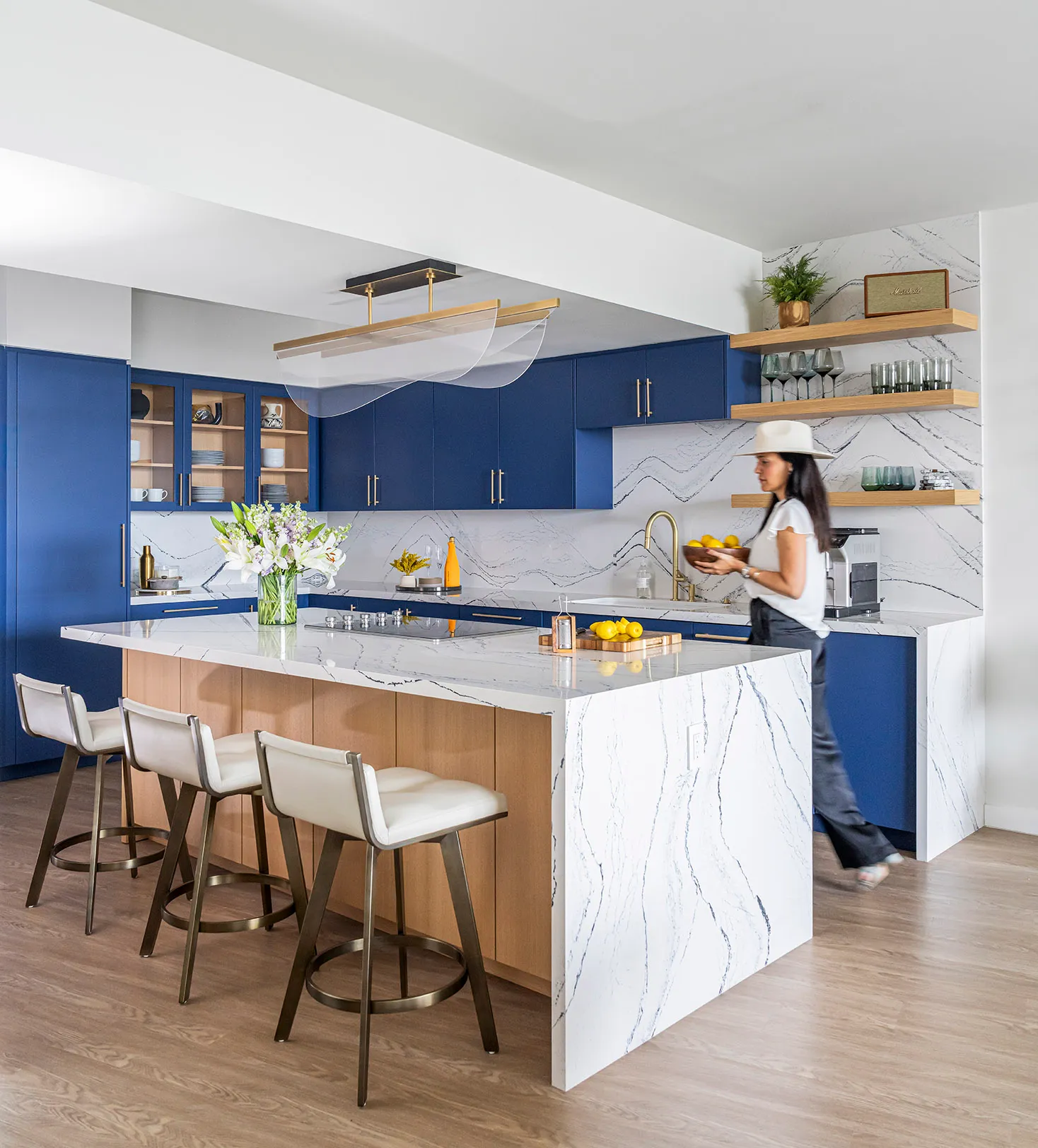
An exceptional kitchen is more than high-end appliances and elegant finishes. Its success lies in thoughtful ergonomics, purposeful zoning, and innovative storage solutions. These principles transform a kitchen into a space where every detail works harmoniously, enhancing the joy of cooking and gathering.
In this piece, you’ll discover expert kitchen design insights that prioritize form and function. From optimizing workflow to integrating modern features, explore how to create a kitchen that looks remarkable and supports and elevates your everyday life.
Understanding Kitchen Ergonomics
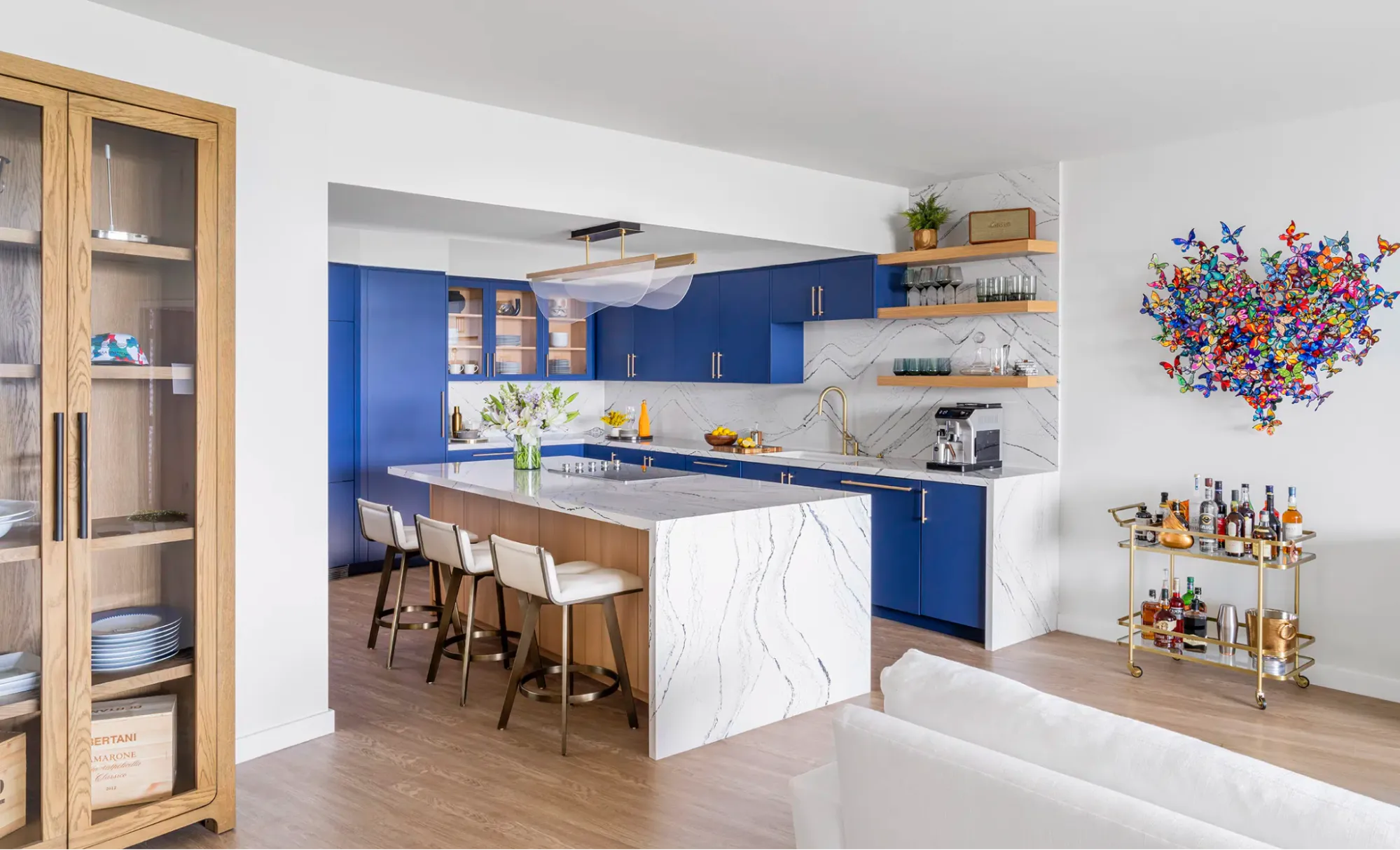
A functional kitchen design begins with ergonomics – the science of designing spaces that work harmoniously with human movement. Ergonomics are the foundations of every successful kitchen layout.
Key principles of ergonomic design
The lifeblood of ergonomic kitchen design lies in creating a space that minimizes physical strain and maximizes efficiency. Three essential principles guide our approach:
- Optimal reaching distances
- Natural movement patterns
- Task-specific work zones
Optimal work heights and distances
Precise measurements make the most important difference in kitchen comfort. The standard countertop height should be 36 inches from the floor. For most users, the ideal working height ranges between 33.5 and 37.5 inches. A clearance of 48 inches between opposing work surfaces works best.
These vital measurements deliver maximum efficiency:
| Element | Recommended Distance |
|---|---|
| Work Triangle Total | 12-26 feet |
| Between Workstations | 41-47 incles |
| Cabinet Height Above Counter | 24 inches minimum |
Movement patterns and workflow efficiency
We design kitchens around five work zones: storage, preparation, cooking, plating, and cleaning. The placement of these zones should follow natural movement patterns to reduce unnecessary steps and reaching.
The traditional work triangle concept, developed by industrial engineer Lillian Moller Gilbreth, remains relevant today. Modern kitchen design has evolved to accommodate multiple users, requiring wider aisles and thoughtfully positioned workstations.
Strategic zone spacing creates an efficient workflow. The National Kitchen and Bath Association recommends clear paths between work zones. Frequently used items should stay within comfortable reach to prevent strain.
Creating Smart Work Zones

Modern kitchens have outgrown the traditional work triangle concept. Yes, it is still valuable, but we need a fresh viewpoint. Kitchens have evolved into multi-functional spaces, so we must adapt our design approach.
Beyond the traditional work triangle
The classic kitchen triangle has transformed into a sophisticated zone-based approach. Modern kitchens serve as more than cooking spaces—they’re social hubs where people dine, entertain, and work. Instead of the conventional triangle layout, we now design kitchens around distinct activity zones.
Task-based zone planning
The most functional kitchen design should include these essential zones:
| Zone Type | Primary Function |
|---|---|
| Food Storage | Refrigeration and pantry |
| Preparation | Chopping, mixing, assembling |
| Cooking | Stove, oven, microwave usage |
| Cleaning | Dishwashing and waste management |
| Social/Dining | Entertainment and meals |
Similar activities should be grouped together to minimize movement. This lets you work efficiently in defined areas instead of repeatedly crossing the kitchen.
Multi-user accessibility considerations
A multi-cook kitchen’s aisles should maintain 48-54 inches of clearance. These factors matter in multi-cook kitchens:
- Strategic placement of duplicate work zones
- Separate prep and cleanup stations
- Thoughtful traffic flow patterns to prevent bottlenecks
The kitchen’s functionality improves with a prep sink on the island next to the main cleanup sink. Multiple cooks can work together without interference. The refrigerator works best at the kitchen’s perimeter, allowing easy access without disrupting the cooking zone.
Integrating Technology Thoughtfully
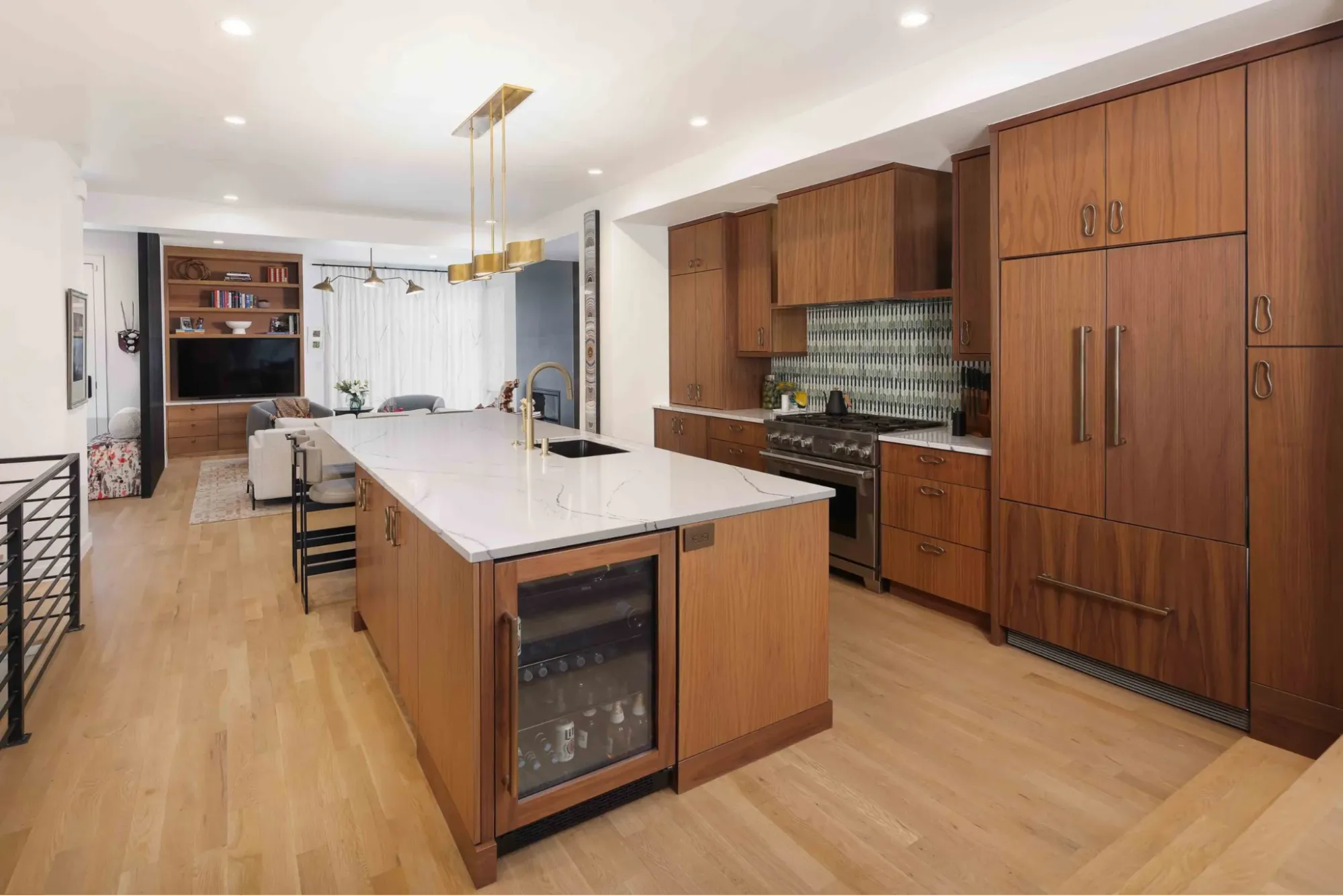
Smart technology is vital to creating a functional kitchen design. The right technological features can greatly improve efficiency and convenience in modern kitchens.
Essential smart kitchen features
The most valuable smart features put practical functionality first. A recent survey shows that 42% of Americans think smart technology is vital to their dream home. These smart elements make the biggest impact:
| Smart Feature | Primary Benefit |
|---|---|
| Voice-activated controls | Hands-free operation |
| Remote monitoring | Real-time kitchen management |
| Energy optimization | Resource efficiency |
| Automated inventory | Reduced waste |
Connected appliance ecosystems
Smart kitchen technology’s strength comes from its interconnectivity. Connected appliances can reduce cooking errors by 40% through automated temperature monitoring. Modern smart refrigerators suggest recipes based on available ingredients and track food freshness levels.
Future-proofing your kitchen design
Kitchen designs need adaptable spaces that welcome new technologies. Here’s what makes a future-ready kitchen:
- Install advanced wiring infrastructure with USB outlets
- Incorporate modular design elements for easy upgrades
- Plan for wireless connectivity throughout the space
- Include smart backup systems for continuous operation
The smart kitchen technology market will reach $76 billion by 2033. This shows its growing importance. Every smart feature should serve a practical purpose. AI-powered cooking assistance and automated energy management systems can reduce utility costs by 25%.
Maximizing Space Efficiency
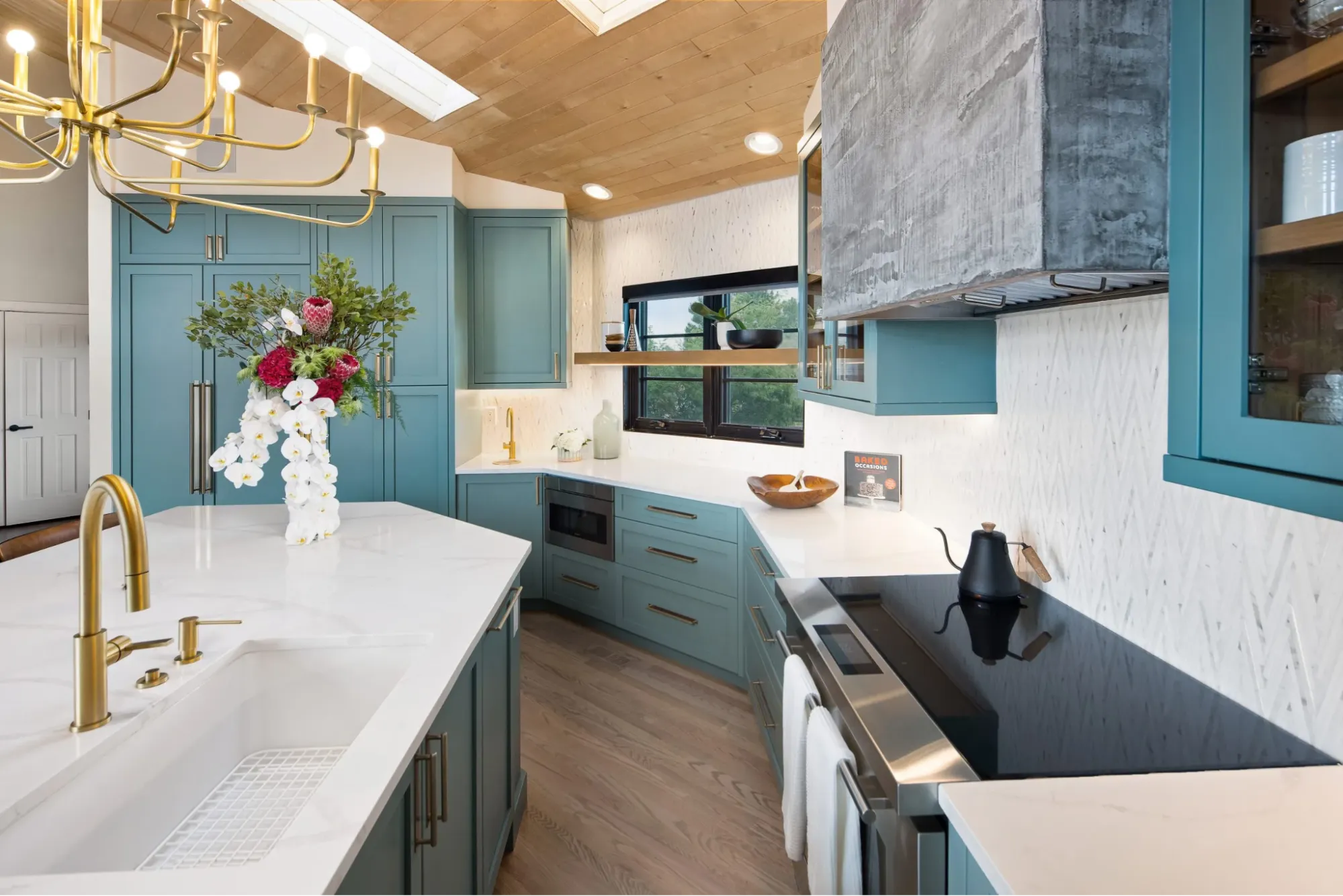
Our experience designing kitchens has taught us that space efficiency makes the difference between a good and exceptional kitchen design. The secret lies in making every inch count, regardless of whether you work with a compact galley or a spacious layout.
Vertical storage solutions
Vertical space utilization can change your kitchen’s storage capacity dramatically. Floor-to-ceiling cabinets boost storage capacity by up to 40%. Here’s our recommended approach for optimal vertical storage:
| Storage Element | Recommended Usage |
|---|---|
| Wall-mounted racks | Utensils and cookware |
| Pull-out sheving | Pantry ítems |
| Floating shelves | Daily-use items |
Corner space optimization
Corner spaces become dead zones without proper planning. Smart corner solutions can help you reclaim up to 60% more usable space. Our recommendations for corner cabinets include:
- Lazy Susan systems for easy access to deep corners
- Pull-out shelves with swing-out mechanisms
- Diagonal cabinet doors for improved accessibility
Multi-functional design elements
A truly functional kitchen layout needs versatile elements. A mobile kitchen island effectively serves multiple purposes. These islands work great as prep stations, dining areas, and storage units.
Pull-out drawers can replace traditional lower cabinets and boost accessibility by 50%. Our clients love integrated appliance garages that keep countertops clear. These multi-functional elements save space and naturally optimize the kitchen’s workflow.
Conclusion
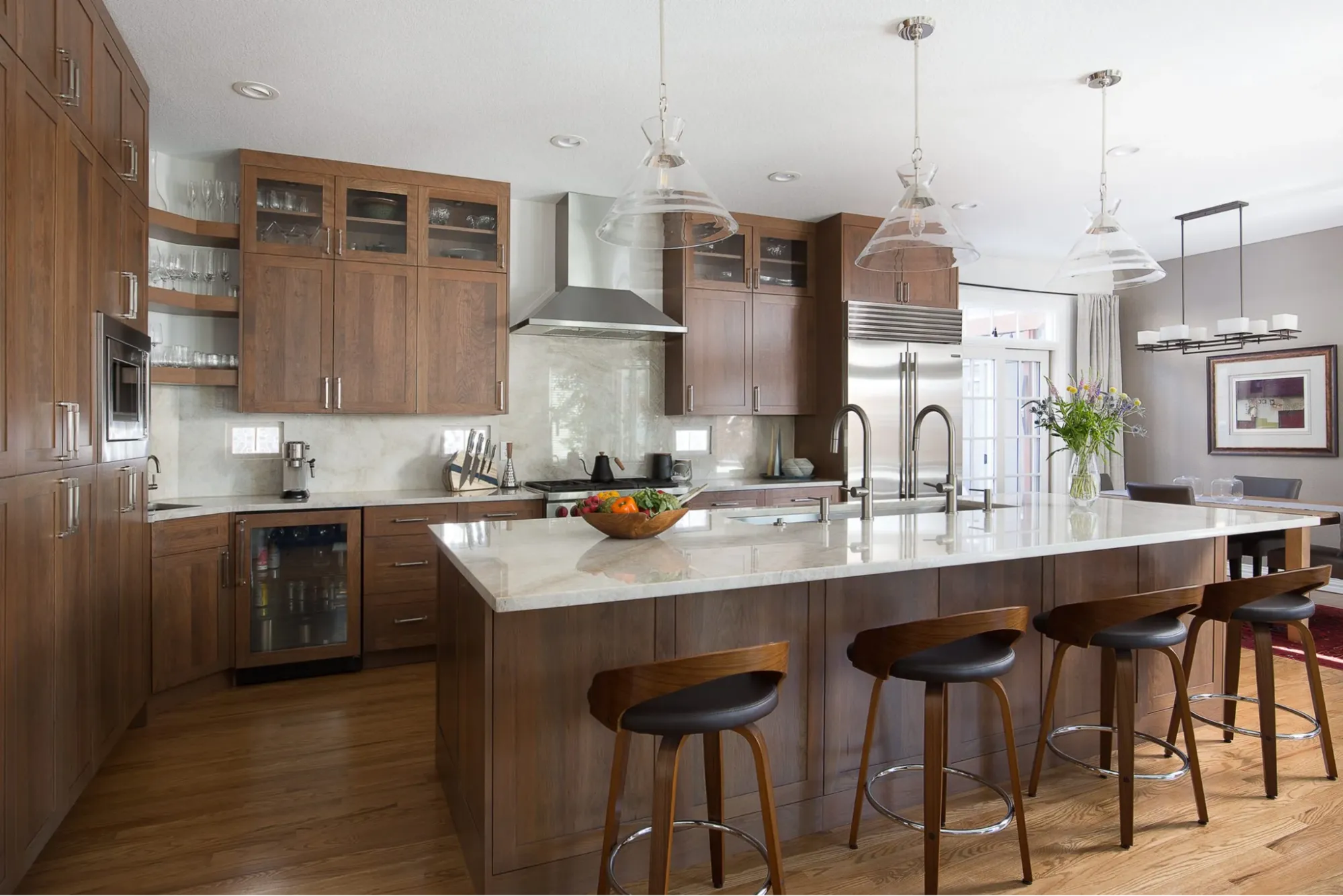
A functional kitchen demands careful attention to ergonomics, smart zoning, technology, and space optimization. Our years of experience show how these elements combine to improve the cooking experience.
Proper ergonomic measurements and thoughtful work zones lay the foundation for a well-designed kitchen. Modern kitchens need adaptable spaces that accommodate multiple users while optimizing efficiency rather than following outdated design rules. Smart technology adds functionality, though practical features should take priority over trending gadgets.
Space efficiency remains the lifeblood of excellent kitchen design. Vertical storage solutions and multi-functional elements make every inch count and turn ordinary kitchens into extraordinary cooking spaces. Your kitchen should reflect your unique cooking style without compromising functionality.
The best functional kitchen design adapts to your changing needs. Your kitchen renovation or new build should create a space that excels in beauty and practicality. The finest kitchen designs blend timeless principles with state-of-the-art features to create spaces that perform as wonderfully as they look.