Sustainable Materials in Interior Design: A Smarter Way to Build and Live
Sustainability in design isn’t a style—it’s a responsibility. As conversations around climate and environmental impact become more urgent, the design world has shifted, not out of trend but necessity. Interior designers, architects, and homeowners are rethinking what it means to create spaces that last. And increasingly, the answer lies in the materials.
Whether you’re renovating a city loft or building a home from the ground up, sustainable choices are no longer a niche—they’re the foundation of a new era. A look does not define this approach but by a powerful intention: to select materials that age gracefully, perform efficiently, and have a lower environmental impact. When chosen with care, these materials look better over time.
What Makes a Material Sustainable?

Sustainable materials are often described in terms of how they’re sourced and processed. But the story doesn’t stop there. It’s also about durability, lifecycle, and how a material functions in a lived-in space.
Some key qualities to look for include:
- Renewability: Materials that regenerate quickly and don’t deplete resources, such as bamboo, cork, responsibly harvested wood, and recycled glass.
- Low Embodied Energy: Products that require less energy to produce and transport. This includes materials like local stone or reclaimed timber, which have a lower carbon footprint due to their proximity and the reduced energy required for their extraction and processing.
- Non-toxic finishes: Natural oils, waxes, or low-VOC sealants that improve indoor air quality.
- Recyclability and biodegradability: Surfaces and products that won’t end up in a landfill or that can be repurposed after their use.
But sustainability also includes longevity. If a material won’t hold up—or if it will be replaced in a few years—it’s not truly sustainable.
Case Study: A Smarter Coastal Kitchen

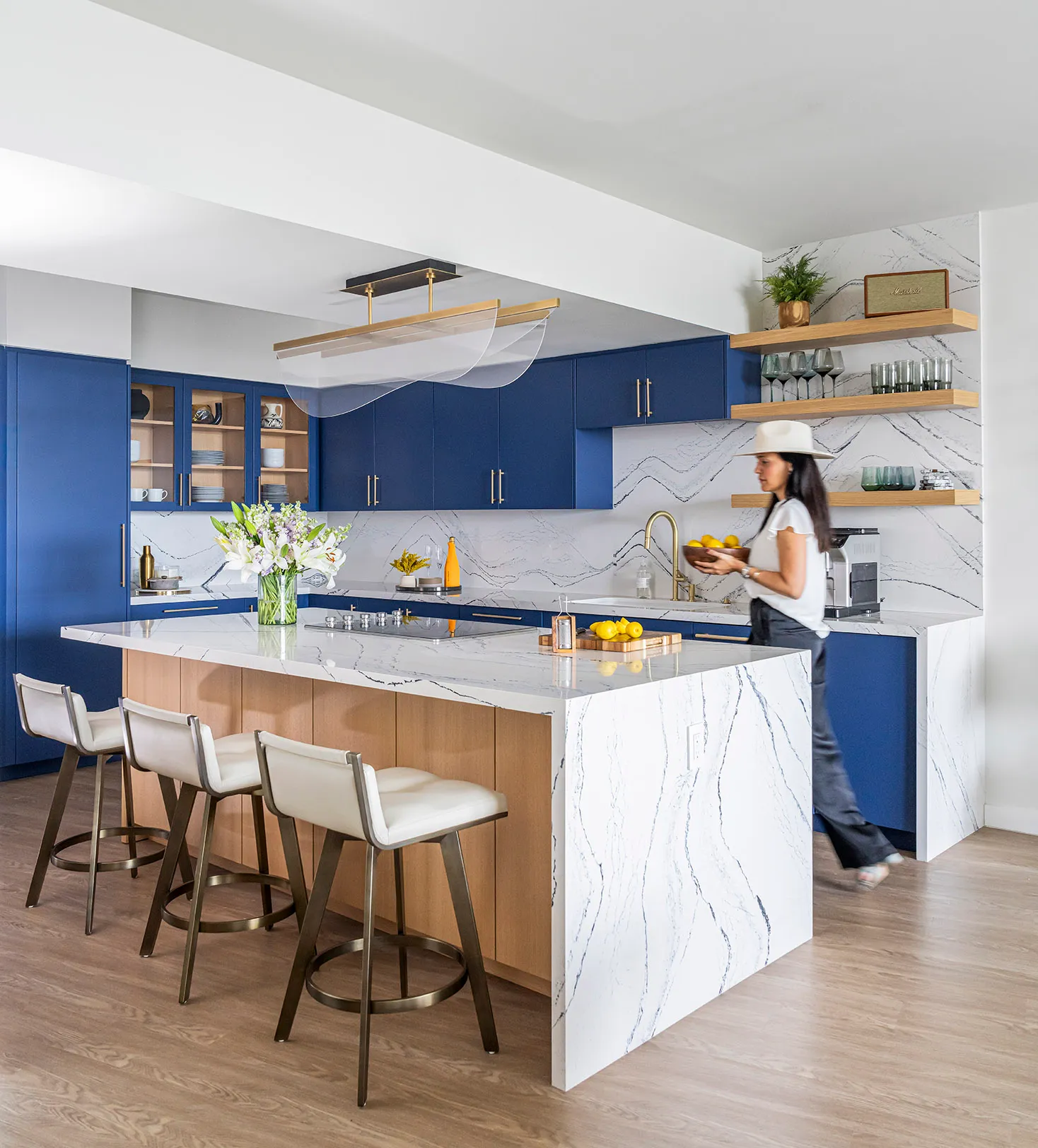
A recent renovation of a Miami condo has redefined sustainable design in a modern coastal setting. The kitchen boasts a clean, contemporary aesthetic that reflects its surroundings. Deep blue cabinetry is a striking focal point, while light wood tones warm the space. Veined quartz countertops resemble the movement of water, providing visual interest without being overwhelming.
Rather than a showcase for eco-consciousness, this space’s sustainability is quiet and structural. FSC-certified wood, panel-ready appliances, and eco-friendly sourced materials were all chosen for their long-term durability and reduced impact. Brass accents offer a refined finish, and an expanded island invites utility and connection.
It’s a kitchen built to be used—not just admired. It also proves that sustainability and sophistication are not mutually exclusive.
Beyond Aesthetics: The Value of Sustainable Materials
Materials set the tone for how a home looks, feels, and functions. Natural stone, for example, holds temperature well and can reduce the need for artificial heating and cooling. Wool rugs are naturally flame-resistant and help regulate humidity. Solid wood furniture, when properly cared for, can last generations—and it doesn’t off-gas like particleboard or laminate.
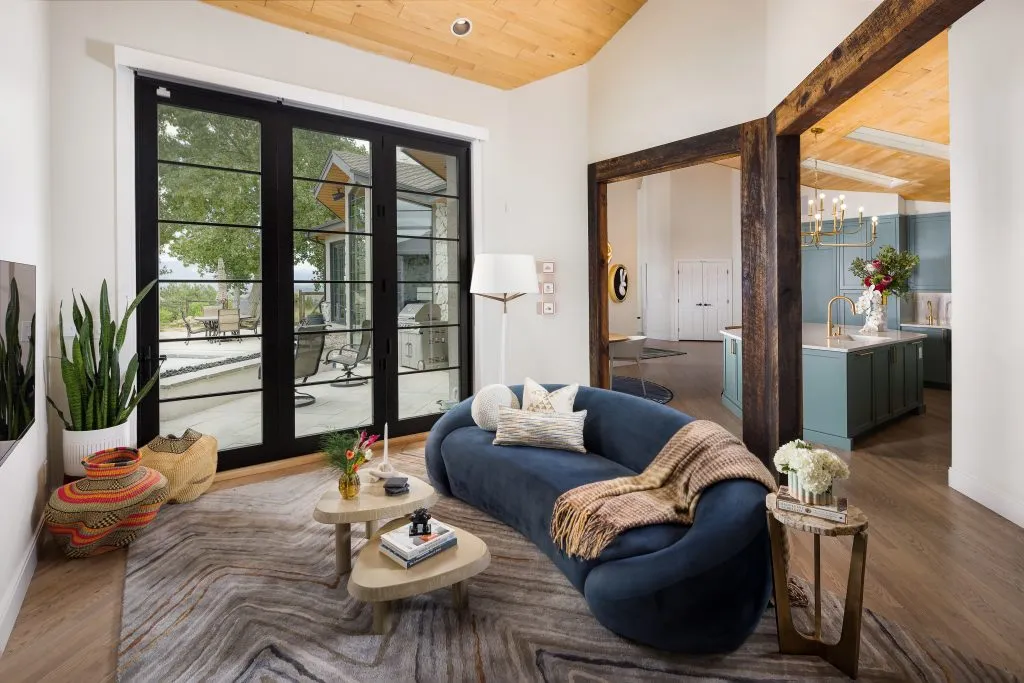
Sustainable materials often have a deeper sense of texture and authenticity. That might mean handcrafted tile with slight variation or limewashed walls that shift subtly with the light. These aren’t imperfections—they’re signs of a living material, one that ages rather than wears out.
Importantly, sustainable design also tends to prioritize fewer, better pieces. The idea is not to fill a space quickly but to curate it carefully. This slower approach ultimately leads to more meaningful, functional interiors.
Certifications That Matter
For those interested in making informed choices, several trusted certifications can help:
- FSC (Forest Stewardship Council): Ensures wood products are harvested responsibly.
- Greenguard & Greenguard Gold: Focus on indoor air quality and limit chemical emissions.
- Cradle to Cradle: Evaluates products based on material health, reuse, energy, water, and social fairness.
- LEED: While more architecture-focused, LEED-certified projects often incorporate many sustainable interiors.
Still, certifications are only part of the picture. Equally important is asking where materials come from, how they’re made, and how long they’re intended to last.
What Sustainability Looks Like Across Different Regions

Designing sustainably isn’t a one-size-fits-all solution. In places like Miami, where humidity and salt air are constants, materials must be durable but also breathable and corrosion-resistant. Porcelain, sealed quartzite, teak, and performance fabrics all function practically while aligning with a clean, modern aesthetic.
In contrast, projects in colder climates—like Colorado or the Pacific Northwest—may prioritize thermal insulation, radiant heat flooring, or heavier natural materials like stone and wool. Local sourcing becomes especially important here, minimizing the carbon footprint tied to transportation.
What unites all these approaches is not the material itself but the thought behind it.
Designing for the Long Term

The idea of longevity isn’t just about physical durability—it’s about aesthetic resilience. Will this space remain relevant in five, ten, or twenty years? That’s the question driving more and more design decisions. In that equation, sustainable materials often come out ahead.
They tend to avoid trend-driven finishes and rely instead on natural color palettes, enduring textures, and grounded materials. Rather than shouting for attention, these elements provide a calm, consistent backdrop for daily life.
As design moves further away from disposable culture, sustainability offers a framework for something deeper: homes that reflect care, craft, and connection—not just visual impact.
Final Thoughts
Sustainable materials are not about compromise. They’re about asking the right questions: Where does this come from? How was it made? How will it perform over time? These aren’t just questions for designers—they’re becoming essential for anyone thinking about the future of their home.
Incorporating sustainable materials isn’t about achieving perfection. It’s about making smarter, more informed decisions and, in doing so, creating spaces that support both the planet and the people who live in them.