The Architecture of Quiet: A Guide to Calming Interior Design
Some homes exhale the moment you walk in. The noise of the day stays at the door, conversations soften, and every room seems to know exactly what it's for. That feeling isn't luck, and it isn't about a single beautiful sofa. It's the result of dozens of decisions, many of them made long before the first rug arrives.
Calming interior design is often mistaken for a look: pale walls, empty surfaces, a palette so neutral it barely registers. But true calm isn't the absence of personality. It's a home where sound, light, movement and materials work together so daily life can unfold with ease.
At MARGARITA BRAVO, we approach calm as an architectural quality, not a decorative one. Because we design and build under one roof, we can shape it at every layer, from the floor plan and the walls to the fabrics and the final lamp. Here's how we create homes that feel genuinely quiet, and how you can bring the same thinking into yours.
1. Start With the Plan, Not the Pillows
Before we select a single fabric, we ask every client the same question: where should your home feel lively, and where should it feel still? The answer shapes everything that follows.
Map the Active and the Still: Kitchens, family rooms and entertaining spaces naturally generate energy. Bedrooms, libraries and offices need distance from it. Grouping rooms by tempo is the simplest way to protect the quiet ones.
Mind the Adjacencies: A media room beside a primary bedroom will always compete with it. A guest suite placed away from the kitchen gives everyone more freedom.
Give Private Rooms an Approach: With a short gallery, a dressing area or a turn in the hallway, a bedroom is never on display from the main living space. Even the direction in which a door swings changes how protected a room feels.
The most peaceful homes are resolved on paper first, because calm is far easier to plan than to fix.
2. Build Quiet Into the Walls
This is where calming interior design moves from feeling to physics. Sound travels through gaps, hollow surfaces and hard materials. The most effective solutions are hidden inside the construction itself, and for clients renovating or building, these are the details we never skip:
Solid-Core Doors: Hollow-core doors let conversation pass straight through. Solid-core doors with proper seals make a bedroom or office feel truly separate.
Quieter Floors: An acoustic underlayment beneath hardwood or stone reduces the sound of footsteps, which matters most in multi-level homes and condos.
Hushed Systems: HVAC equipment, returns and appliances should be placed and specified with sound in mind, not simply wherever they fit.
No one will ever see these decisions. They'll simply notice how peaceful the home feels.
3. Layer Soft Materials That Absorb Sound
Stone, glass, polished concrete and soaring ceilings are beautiful, but they reflect sound and can leave a room feeling restless. Textiles are the antidote, bringing comfort and acoustic softness at the same time.
Generous Rugs: A large wool rug over a quality pad defines a gathering area while quieting footsteps and echo.
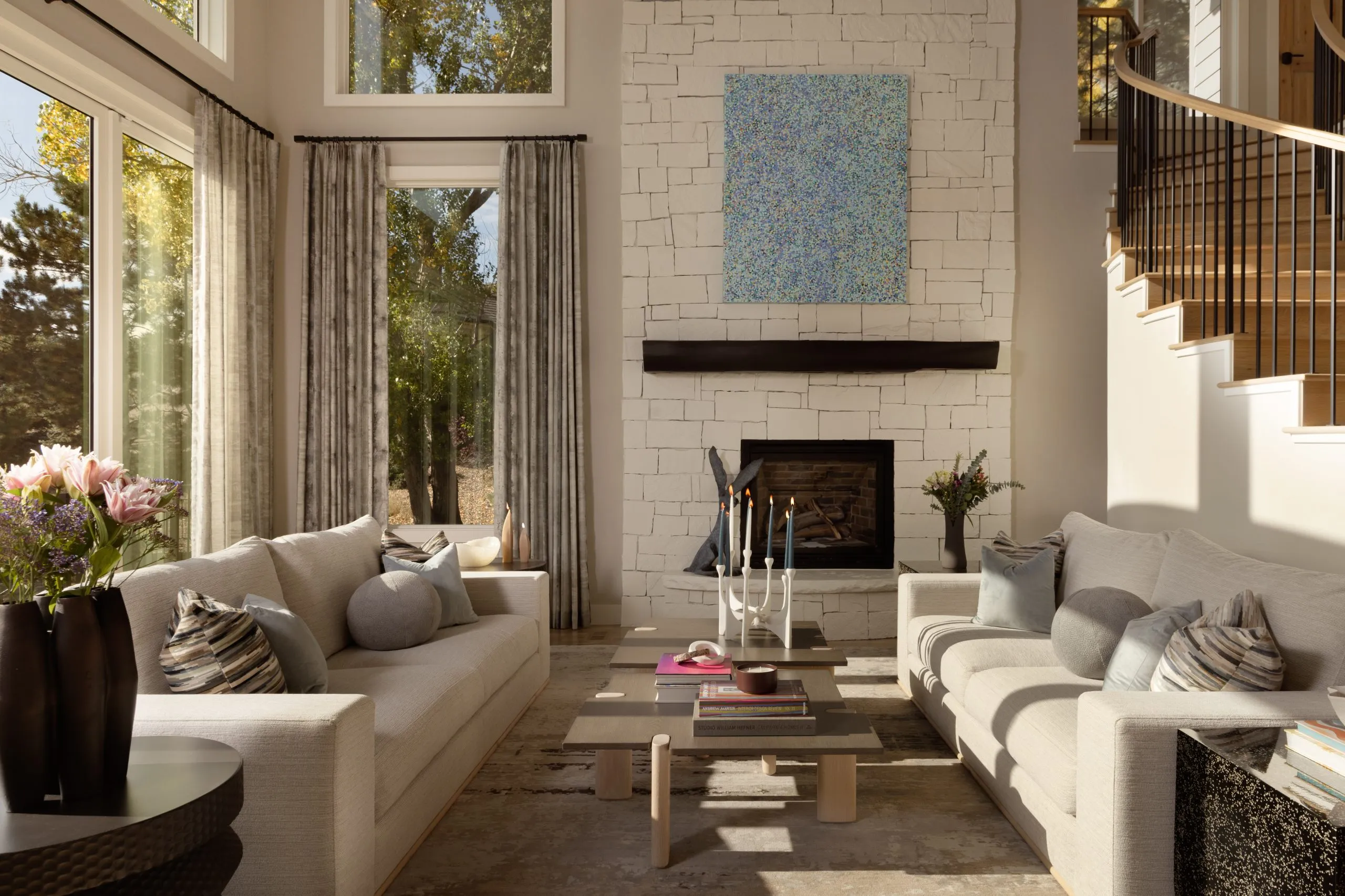
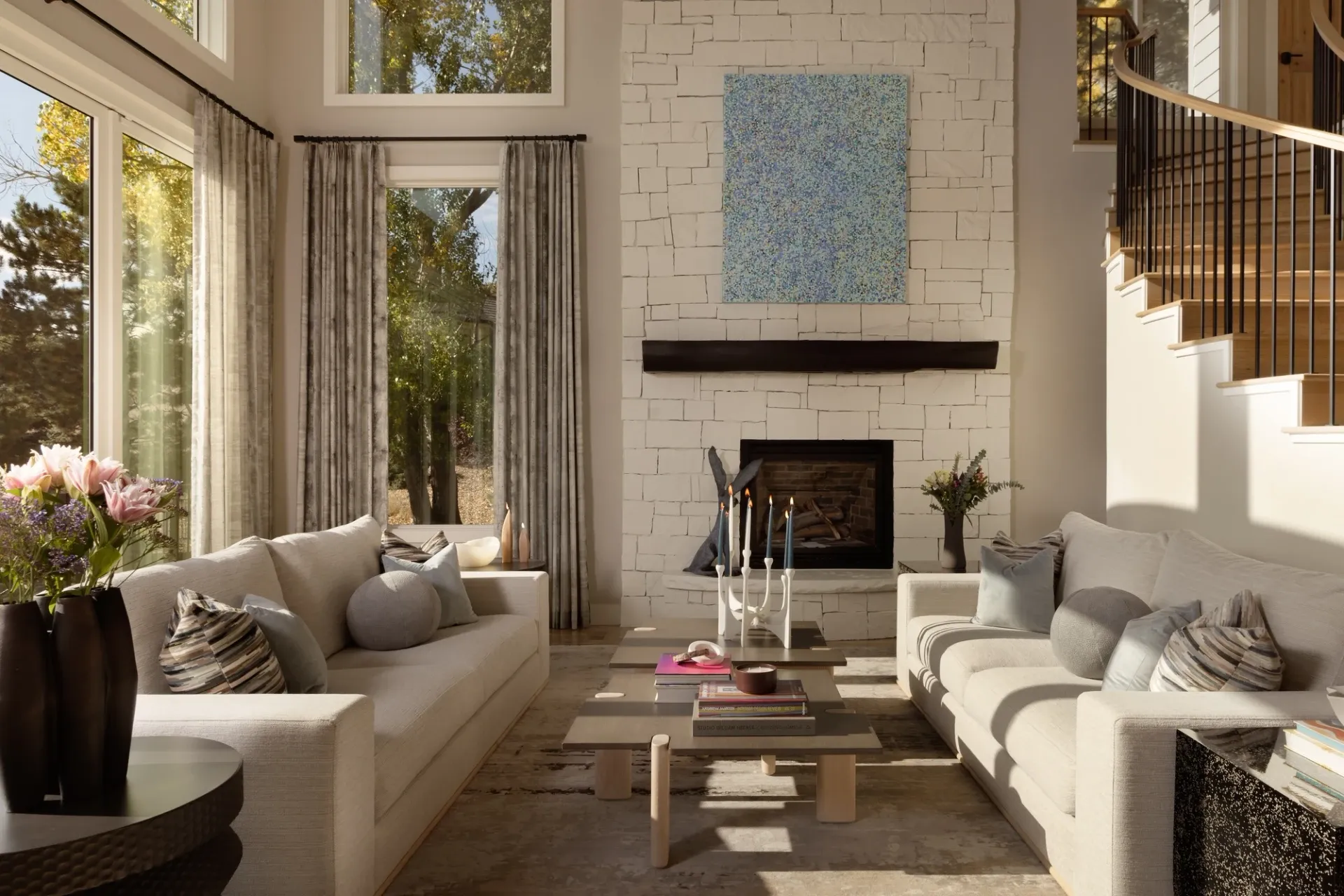
Full-Height Drapery: Floor-to-ceiling curtains in linen or wool give windows presence and soften a room's acoustics. In the Smith Residence, full-height drapery and a generous rug keep a living room anchored by a stone fireplace feeling soft and inviting.
Upholstered Surfaces: Upholstered headboards, fabric-wrapped wall panels and deep, tailored seating all absorb sound while making a room feel held.
Softness you can touch is often softness you can hear.
4. Let the Palette Breathe (Calm Doesn't Mean Beige)
One of the most common myths about calming interior design is that it requires a neutral palette. It doesn't. Color and pattern can feel deeply restful when their scale and placement are considered.
Repeat, Don't Scatter: Carrying one wood tone or one stone through a space creates order. Too many competing finishes create visual noise.
Choose Matte Over Mirror: Honed stone, limewashed plaster and oiled wood feel quieter than high-gloss surfaces while still carrying a strong point of view.
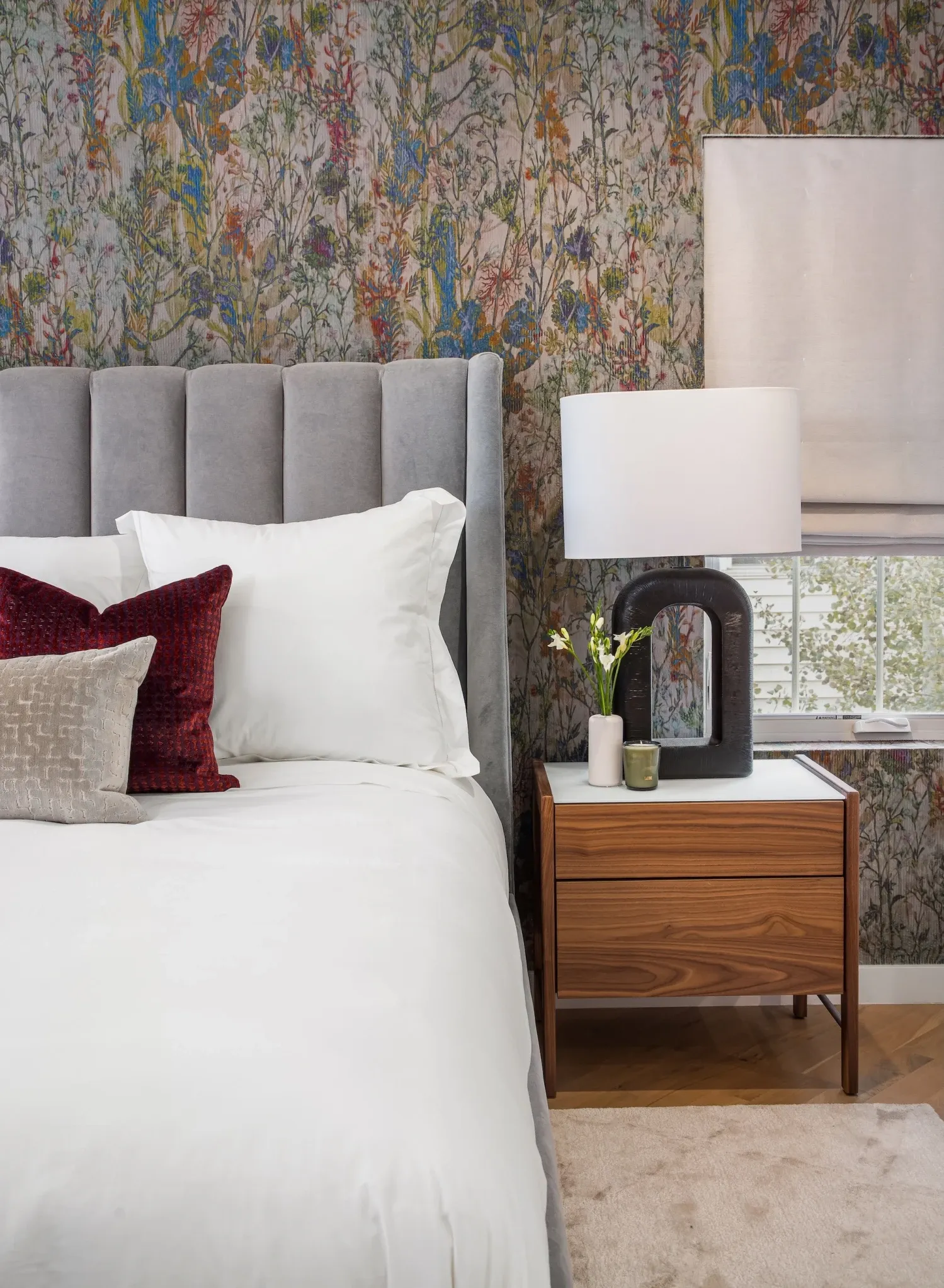
Give Pattern Room: At Interwoven Patterns and Art – Bold Personality-Driven Luxury Residence, a botanical wallcovering and a single red accent pillow bring personality to a bedroom that still feels at rest, because the upholstered headboard and crisp white bedding let the pattern breathe.
Calm comes from how materials relate to one another. It's harmony, not absence.
5. Bring Order to the Busiest Rooms
The kitchen will never be a silent room, and it shouldn't be. It's where the household gathers, cooks and lingers. Here, calm comes from clarity.
Hide the Everyday: Thoughtful storage keeps daily tools close without keeping them on view. Appliance garages, panel-ready appliances and deep drawers stop clutter before it starts.
Plan for Flow: When prep, cooking, cleanup and seating each have their own zone, several people can share the kitchen without crossing paths.
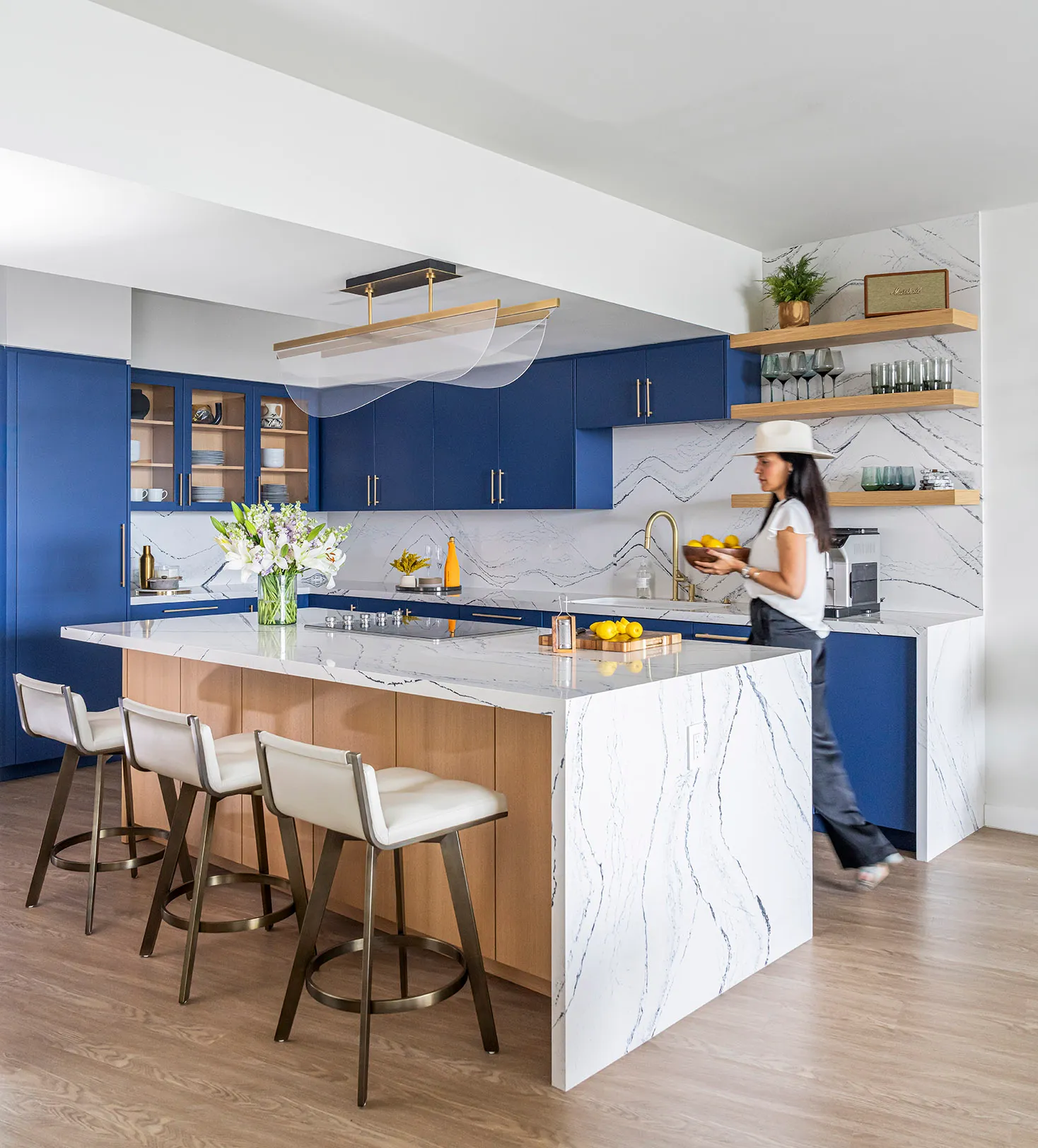
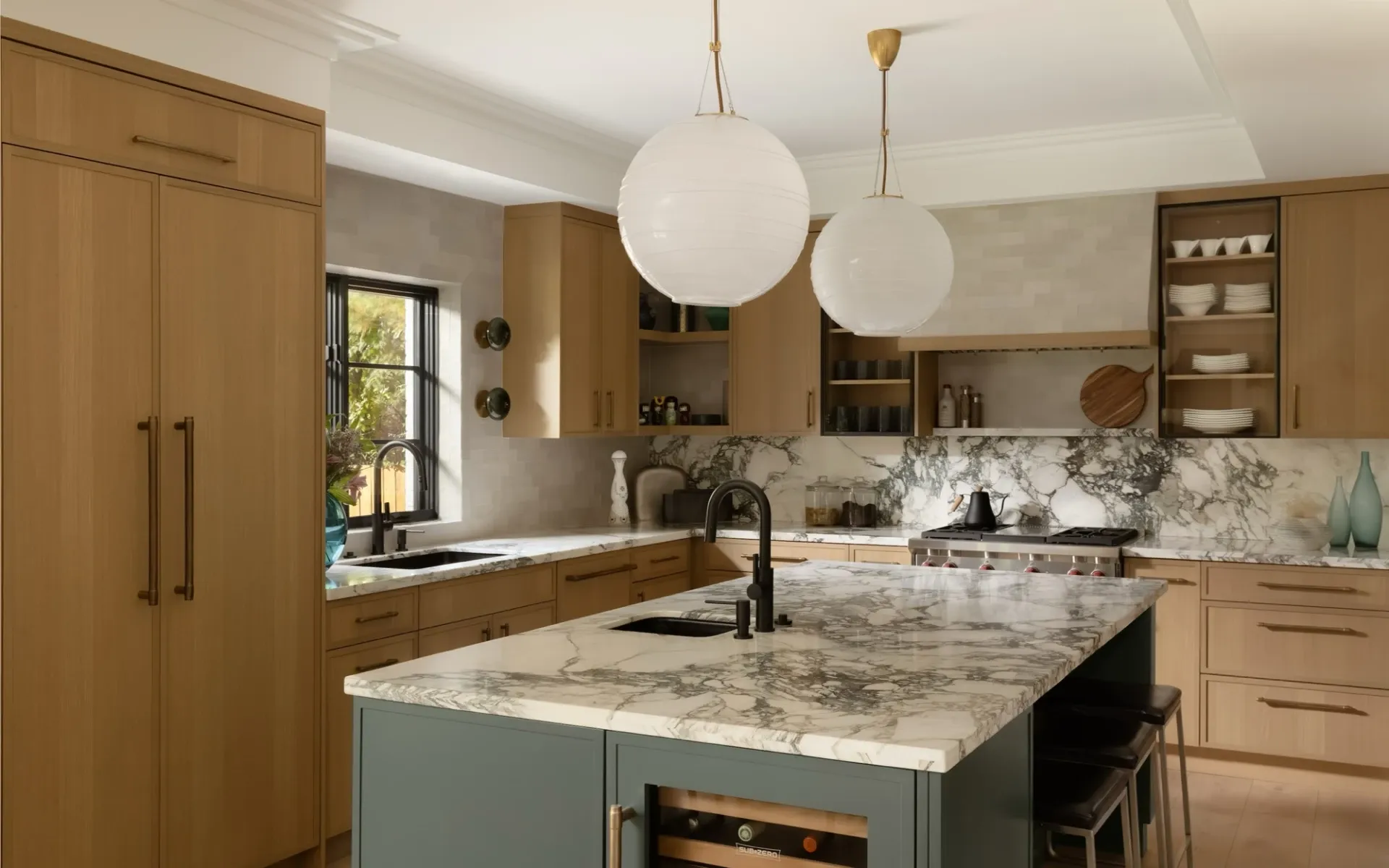
Keep the Material Story Simple: The kitchen at Eclectic Worldly Haven – Serene Global Luxury Retreat pairs natural wood cabinetry with one softly veined stone across the island and backsplash, while two globe pendants set a quiet visual rhythm.
A calm kitchen isn't an empty one. It's one where everything has a place.
6. Light for the Hour, Not Just the Room
Few elements shape the mood of a home as powerfully as light, and few are so often left to a grid of recessed cans.
Layer It: Combine ambient, task and accent lighting so a room can shift from bright and functional to low and intimate.
Keep It Warm: In living spaces and bedrooms, dimmable fixtures in the 2700K–3000K range feel restful in the evening.
Bring It Down Low: Table lamps, sconces and picture lights draw the eye downward and inward, which slows the pace of a room.
Plan the Controls: Scene-based dimming lets a single touch move the whole home from day to evening.
The goal is never more light. It's the right light, at the right moment.
7. Design for Privacy Without Isolation
A calming home shouldn't feel removed from life. It should let everyone join in or step away with equal ease.
Create Retreats Within Rooms: A reading chair placed just beyond the main circulation path offers solitude without closing a door.
Use Pocket or Paired Doors: Two spaces can live together during the day and apart in the evening.
Give Guests Their Own Rhythm: A guest suite with its own approach lets visitors settle in without disrupting the household.
When a home makes room for different tempos (conversation, work, rest and solitude), no one has to compete for peace.
Final Thoughts: Calm Is Felt, Not Seen
Calming interior design isn't a style you can buy off a showroom floor. It's the sum of a thoughtful plan, well-built walls, soft and honest materials, and light that follows the rhythm of your day. When those decisions are made together, the result is a home that feels effortless, because every detail is quietly doing its job.
At MARGARITA BRAVO, we believe the most luxurious thing a home can offer is ease. Whether you're planning a whole-home renovation or a new build anywhere in the United States, our design + build studio brings every layer together under one roof, from the first sketch to the final styling. The conversation begins with how you want to live.